International
Canoe
Training
Launching an International Canoe
Launching a canoe does require you to be sorted out and ready to sail as soon as you are
on board, its difficult to sort things out afloat. Get the seat rigged and make sure everything
is free and ready to sail. Rudder and daggerboard to hand.
When the wind is light you will be able to pull the sails up and wheel the canoe into the water. If you pull the sliding seat out to windward it will sit on this a bit like a kick stand on a bike.
Once off the trolley put the daggerboard in.
If you are launching from a soft beach or a muddy shore you could lightly pin the canoe in place with the daggerboard.
Getting the board in should help stabilise the canoe and allow you to get to the rudder and put that in. Another method is to leave the bow resting on the cradle of the trolley which works well if the wind is in the right direction.
Make sure you have the tiller extension sorted out and not caught, similar with the main sheet,
jump onto the aft deck and sail away….
In windy conditions you may find the canoe needs to be held once the sails are up even on
land.
Tying the canoe down to the trolley from the shrouds helps.
If possible get the rudder partly in, or at least in a position its easy to grab.
Jib up first, then the main. Once the main is up put plenty of cunningham on , this will calm the sails down.
DO NOT LEAVE THE BOAT!
Once half way into the water, untie the canoe, launch and pull out the sliding seat fully to
windward.
Daggerboard in, rudder in, then off.
If you have kind fellow competitors then they
will hold the bow as you go back to get the rudder down, if not then you have to be quick!
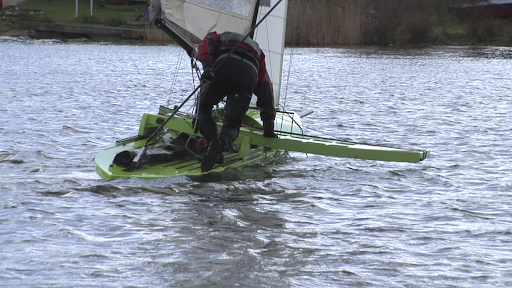
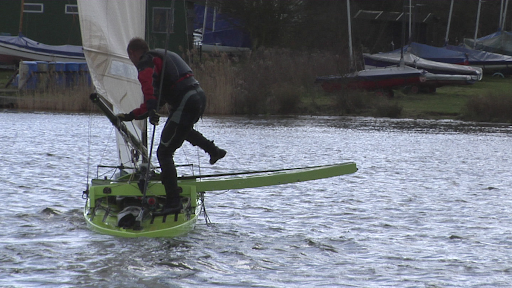
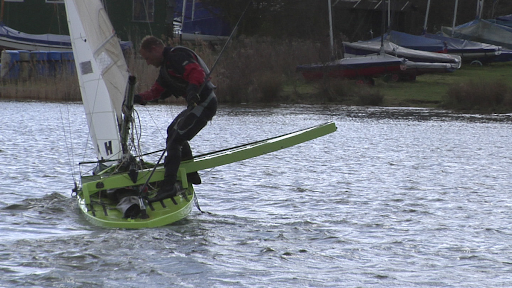
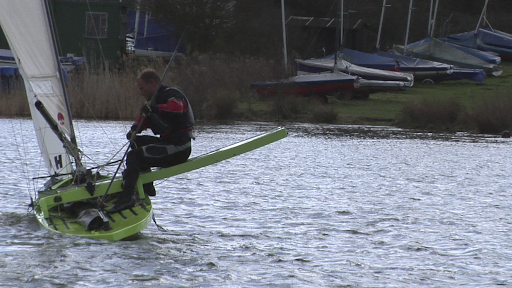
Tacking an International Canoe
This is the trickiest bit of sailing the canoe, but once this is mastered the rest is actually straightforward.
Everyone seems to tackle this a bit differently but here is how Alistair Warren does it.
- Change your grip on the tiller extension to “frying pan” style.
- Slide down the seat as you bare up.
- Both feet on the aft deck.
- Down on the aft knee only.
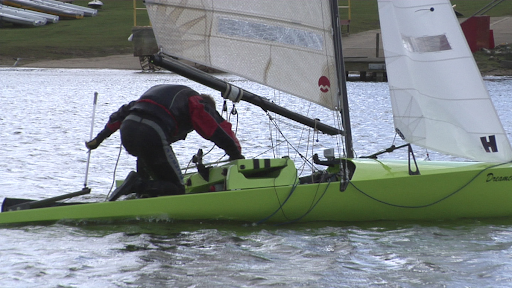
- As the boom comes to the center line (but not before) flick the seat over, often its still
leaning slightly to leeward and its before the battens pop and before you go around
the boom. - Keep steering through the tack!!!
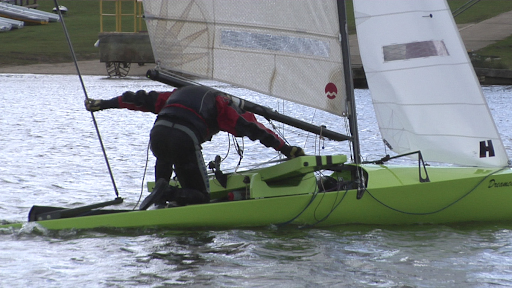
- Lean back as the boom passes in front of you.
- Pushing from the old fwd leg step over the seat.
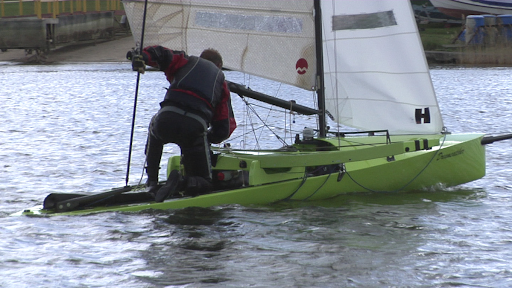
- When the canoe starts to lean away from you plonk yourself down on the seat, this
should pump the sail and the battens pop, you might need to encourage this a bit in
light or med/ light winds. - The tiller extension ends up behind you so swap your hands over.
- You need the tiller extension in front of you, held “dagger” style to effectively play the
main sheet. - If the boat keeps going into irons during a tack there are a few things to try.
● Keep steering through the tack, it’s easy to centre the tiller part way through.
● Lift the daggerboard
● More Cunningham
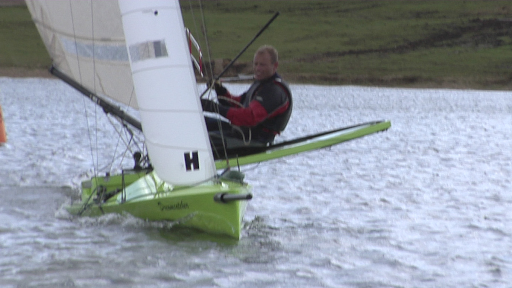
Preparation to tacking an IC is all about keeping speed and compliment to the manoeuvre.
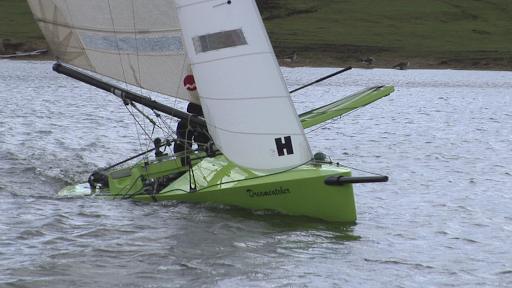
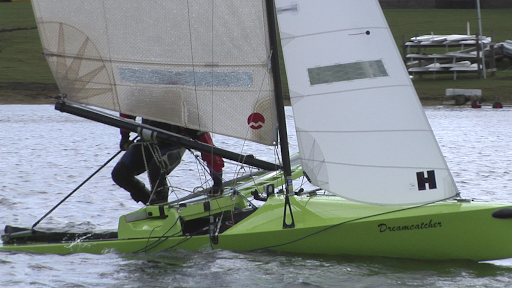
As you near to the boat start to steer into the wind.
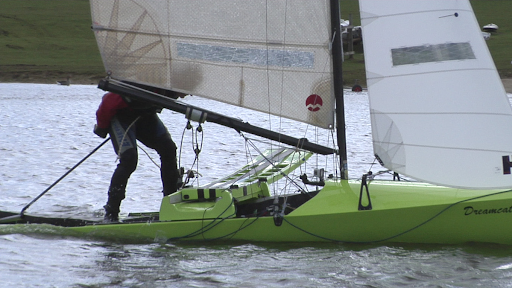
Stand on to the boat and either walk behind the mainsail or duck under the boom.
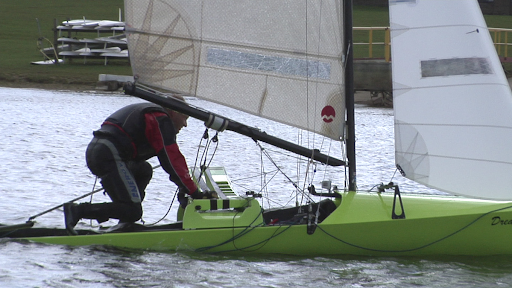
Do not be temped to jam the main sheet as this will only cause a capsize.
Gybing an International Canoe
Actually this is one of the easiest boats to gybe. The boom is short so the loads are low, but remember its a narrow boat so no gybing reach to reach, strictly down wind only!
1. Point he canoe dead down wind
2. Kneel on the aft deck
3. Pull the seat out to the new windward side, if you are carrying on the run then just a
bit or if its to go on a reach then fully out
4. Tiller extension out to the new tack
5. Pull the boom over (when windy i do steer it a bit though the gybe)
The San Francisco Roll
The Capsize Drill
Once capsized the canoe can clock around so that the mast is pointing into the wind. If you
pull it up the wind catches the sails and the canoe capsizes on top of you. Swimming around
the transom takes too long and the canoe clocks around again and you are back where you
started. In a moderate wind pushing the seat into the water when righting can slow this down
preventing the capsize. In a stronger wind this does not work.
The San Francisco Roll:
To overcome this you pull the canoe up but grab the daggerboard as it passes you and go
under the canoe ending up on the right side of the canoe ready to right it. In a very strong
wind the daggerboard will pick you up if you are in the right position.
It’s that easy, Honest!